Monday, May 16, 2011

Journal 1: Literary Topics


Discussion on Literary Topics

Point of View/Characters: From whose point of view is the story told? Does this change? How reliable is the narrative voice? How well does the reader get to know the characters? How credible are they? How are they presented? How does the writer persuade us to like/sympathize with some characters and dislike others?

Oedipus the King is written from the 3rd person point of view. Because it was written as a play, it remains solely in 3rd person. There is no explicit "narrative voice," aside from the stage directions, which are fairly accurate. I must point out the fact that the stage directions were added back in in modern times, since the originals were lost over time. Aside from the stage directions, the closest thing to a narrator is the chorus, which is not always accurate, because it or they are actively involved in the story, which makes them susceptible to dramatic irony and other literary or plot devices that can cause them to be inaccurate. This is explicitly demonstrated when the chorus has no knowledge of Oedipus' past.

The reader/audience gets to know the characters of the play through the stage directions, dialogue and entrances. The reader/audience gets to know the character of Oedipus very well, as they get to see him in public, as well as in private during his conversations with Jocasta. Greek audiences probably knew the characters of the play from their knowledge of Greek mythology. Most characters in the play are of typical Greek play/myth stock. I believe Sophocles molded Oedipus and his supporting cast of characters to conform to the ideals of Greek society, or more specifically, Athenian ideals. Oedipus always generally plans things ahead of time, like send Creon to the Oracle before the priests asks him to do something, which is one trait Athenians valued. Oedipus is presented as the protagonist. Sophocles presents him in a favorable light by displaying Oedipus's gentlemanly characteristics through his dialogue with the priests of Thebes. Creon is portrayed in a bad light because of Oedipus's dialogue with Tiresias and his argument with Oedipus later. Tiresias is cast as a boy who cried wolf, as Oedipus doesn't believe the incredible story that he killed Laius. Jocasta is portrayed as the loyal wife and queen of Thebes. Sophocles does this by having her settle differences between Oedipus and Creon. She also shown to be very supportive and loving of Oedipus.


Sunday, April 10, 2011

Journal 3


Topic B: Choose a character who is involved in a struggle against his or her society. Write a response (approx 250 words) exploring two or three relevant issues listed in item C under "The Main Characters" section.

I-330 is a complicated character. Her struggle and rebellion against society is a catalyst for D-503's own disobedience. I-330 is embroiled in a struggle against the One State. She expresses her contempt of the One State and its policies many times and openly mocks it. I-330's rebellion start out socially and later evolves into open rebellion. As D-503 begins to learn more about I-330, he also learns more of her disobedience toward the One state. I-330 drinks and smokes, enjoys the Ancient's culture, and openly mocks the One State's policies. Her rebellion is being different from the great uniform masses. Toward the end of the book, Zamyatin reveals that I-330 is part of the resistance group "Mephi." I-330 engages in actions to bring down the One State. On the Day of the One Vote, it seems that she was very involved in the first ever dissent among ciphers. We see I-330's devotion as a idealist as she martyrs herself by not revealing information to the Benefactor. Although Zamyatin leaves the future of the One State undecided, I-330's efforts were successful to a point. She helped create a major upheaval in the society that claimed that it provide "infallible happiness." The Mephi were successful in bringing down the Green Wall, but their ultimate goal -- the downfall of the One State -- is left a mystery. Her actions on the behalf of the Mephi brings about her implied death.

Wednesday, April 6, 2011

Journal Attempt Duex


Although there are many other interpretations of Yevgeny Zamyatin's We, Zamyation presents his dystopian society as a criticism of the mass production by presenting the extremes of its methods. In Zamyatin's novel, the citizens are merely a piece of the One State's enormous assembly line. The extremes of scientific management are shown in the novel; one example being the Table of Hours, which regulates all the citizens' lives. Although this view does not seem to be too realistic, it was when We was written in 1916. During that time, the world experienced massive industrialization, which would make We seem like a greater possibility. Zamyatin was probably influenced by his work as a naval engineer for Russia and England, the birthplace of the Industrial Revolution. The hope that Zamyatin subtly displays is something that is innate to all human beings: social rebellion. We can see characters, such as I-330 and D-503, that rebel against social norms and discard their chains to the One State machine. This characteristic hints that humans aren't meant to be cogs in a machine or part of a collective, but they are all individuals. This would be a fatal flaw in a society that requires the uniformity of humans.

Sunday, April 3, 2011

Dystopian Novel, We: Journal, Part One


"But our Table of Hours! Why, it
transforms each one of us into a figure of steel, a six-wheeled hero of a mighty epic poem. Every morning, with six-wheeled precision, at the same hour and the same moment, we— millions of us—get up as one. At the same hour, in million- headed unison, we start work; and in million-headed unison we end it And, fused into a single million-handed body, at the same second, designated by the Table, we lift our spoons to our mouths. At the same second, we come out for our walk, go to the auditorium, go to the hall for Taylor exercises, fall asleep...." (12)

This passage embodies the essence of the One State, the society in the novel We. The repetition of words and phrases such as "unison," "as one," and "million-headed unison" parallels the society of the One State's scorn of individualism. The citizens of the One State rejects individualism and instead accepts conformity in order to become "a figure of steel, a six-wheeled hero of a mighty epic poem." Also it reveals the methods of which the One State suppresses freedom. The Table of Hours transforms the citizens of the One State from "I" to "we" by regulating their lives. In order to promote conformity the Table regulates the citizens' lives to the point where it dictates we they "lift [their] spoons to [their] mouths [...] [when] we come out for our walk, go to the auditorium, go to the hall for Taylor exercises, fall asleep..." all for the purpose of fostering uniformity. At this point, the protagonist, D-503, is completely loyal to the One State, firmly believing in its tenets and infallibility. D-503 is still the average One State citizen, before he transforms later to his "monkey" self.

Monday, March 14, 2011

The Literary Value of the Stranger: a Rant


The reading assignments of IB Junior English are no feat for the faint of heart. This is true in the case of the Stranger. Many of my friends see no literary value in the Stranger, if not all the books in the IB English course in general. I will try my best to answer the question: does the Stranger have literary value, and if/not so why?

Assigning literary value to the Stranger is a difficult task. It is obvious (although debatable) that the Stranger is more significant compared to Megan's Busy Day. However, it is much harder to confidently say that the Stranger has more literary value than Their Eyes Were Watching God. Good writing cannot be quantified, so assigning value that is relative is difficult. The best rating scale I can give the Stranger is that it has literary value, kind of (but is a stretch), and not at all.

How does one determine value?

Opinions are one way of assigning value to books. Most of the time, people have conflicting opinions of books. That's how English teachers receive essays that, are for the most part, original. A single person advocating the significance of a book can usually be disregarded, but a consensus opinion of a million people? It is far more likely that view is correct (or however close to correct humans can get). How about in the case of the Stranger?

Despite the public opinions of my classmates, I believe the vast majority of people who see the actual value in the Stranger are probably English majors, professors, and English buffs. The majority of the people who read the Stranger are probably high school students who have no idea why they have to read the book. They are told that the book is great and that reading it will benefit them in some way. English majors, professors, and English buffs probably don't make up a majority of the Stranger readers, but their opinion certainly should not be disregarded.

These people certainly devote a significant amount of time understanding and analysis texts such as the Stranger. They could, from an academic perspective, prove that the Stranger has beautiful or obscure literary what not, which, in their opinion, makes the book valuable. Their opinions are valuable because of the time, effort, interest, and expertise they pour into the book.

However, it is important to remember the majority of the readers of the Strangers are not academics that enjoy the Stranger for intrinsic reasons. Also it is important to remember value is relative. One man's trash is another man's treasure, as they say. One analogy works well: in ancient times, Spartans used iron rods for currency. Now in modern times, we use pieces of paper worth more than what it takes to make them. Our money is only worth something if we believe it to be worth something. It the Earth had an abundance of gold, I doubt gold would be worth much.

An important part of relevance is context. Even with dedicating several days examining Camus' philosophies, we only vaguely understood Camus' thinking and the world that he created for, which did Camus and us a great disservice. Right out of the gates, the novel was worth as much to high school students as a couple iron rods, which probably account for several of the half-something attempts on essays we will be turning in in a few weeks. In addition, the world is much different from the time Camus lived and the values are much different. Existentialism is not as significant as it once was after WWII.

An even more fundamental problem is the lack of preparation or interest in English. I will clarify the last point. Most of the English classes I have taken in my lifetime have done a horrible job preparing me to understand, analyze, and communicate themes in a book. They have hardly showed me the intrinsic values of reading (I do like to read though). I suppose my general point here is how little students recognize the value in literature. Another iron rod for us. Most people don't really have an interest in English. Most of students today will eventually become engineers, doctors, or other professions, which honestly don't fully use the skills English classes attempt to teach. Not many students will go on to become English majors.

I suppose from an academic perspective, the Stranger has literary significance. For students, it really doesn't. Some say that the short sentences and the absence of fancy words makes it significant. To them, I say, "Don't children's books also have short sentences and lack fancy words?" Granted, obviously aren't as valuable as the Stranger but the point is probably one that some high school student trying to slack his or her way through a journal. I guess to a high school student, the book is not valuable. To academia it is. In my opinion, what makes it academically valuable is that it gives insight to what Albert Camus thought and his philosophy. So that makes it kind of valuable.

El Thesis


Through the assumptions of Meursault by other characters, Camus illustrates the universal pursuit of happiness and contrasts it with Meursault's acquirement of happiness through acceptance.

Personal Reaction to the Stranger

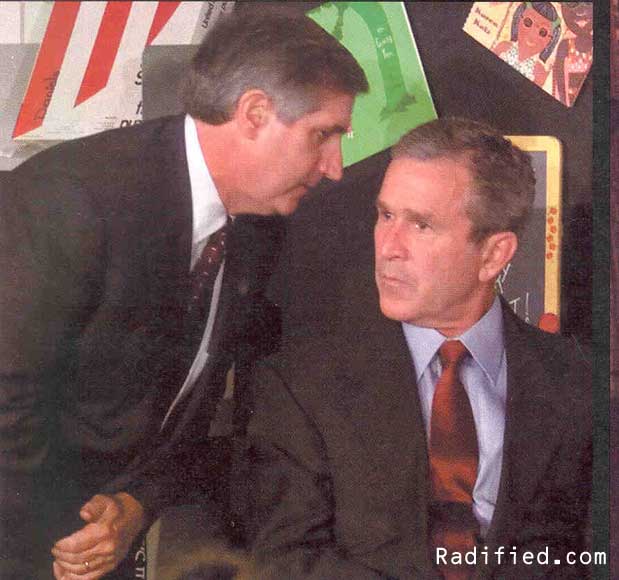
George W. Bush actually read the Stranger on the Crawford ranch, but this is him reacting to something else.

When I first read the Stranger, I read it straight through, probably speed reading/skimming like I usually do. At first I thought it was this story about some guy who does essentially nothing in the first half then shoots a man and is executed for it (we assume). I had trouble accepting the fact that Meursault got executed. Just a thought. Then I went on Wikipedia, like I usually do, and researched more about the novel and author.

Then English came. So I read it and found some cool beans metaphors and literary devices and what not. Sort of impressed. I suppose I half understand the brilliance, although I cringe at the word, of Camus' work. I think, by personal philosophy, or perhaps by peer pressure, I shouldn't like English books. So I rationalize my enjoyment, or (the better word) indifference (hint, hint) of the book to this: Do you know how coffee or beer, when you first taste it, it tastes terrible? Then you ask why millions of people around the world "enjoy" these beverages? And they say, "It's an acquired taste. You wouldn't understand, it's just an adult thing." And then we accept it like the sheep we are and pass this terrible tradition down through the ages? Yeah, this is that. You should also know, when people say, "It's an acquired taste. You wouldn't understand, it's just an adult thing," it just means it's terrible and they got used to it.